
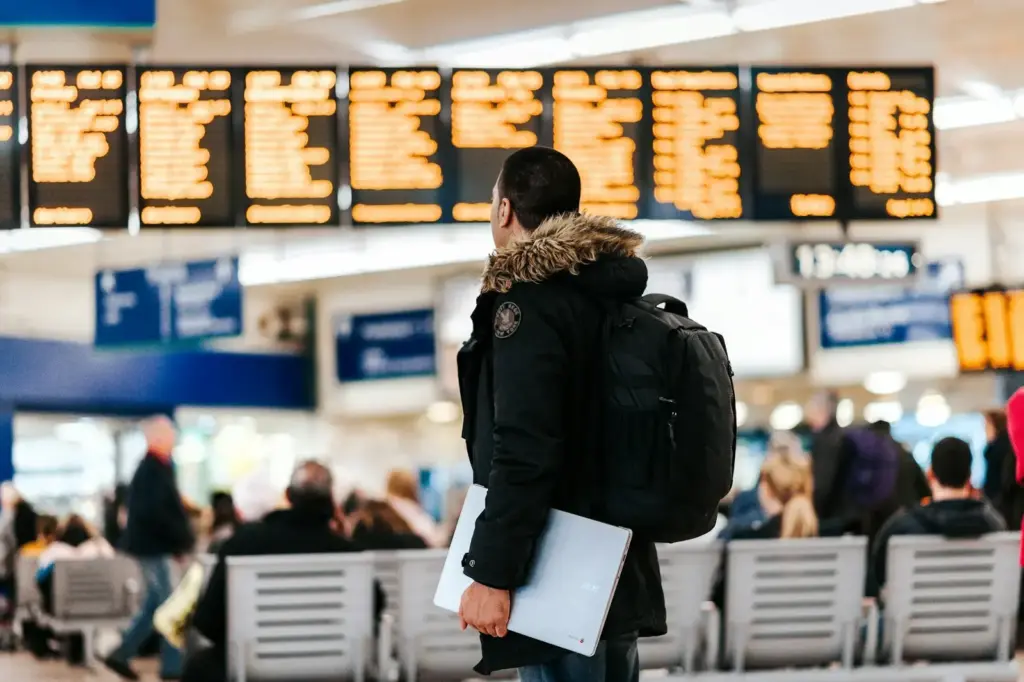
A low airfare may look attractive, but a connection that is too short can quickly turn an affordable trip into a stressful experience. Airlines publish minimum connection times, but the shortest connection they permit is not necessarily the best connection for you.
Whether you are flying from Boston to Brazil, connecting through Miami on your way home, or planning a family vacation to Europe, understanding what must happen between flights can help you avoid unnecessary stress, missed connections, and unexpected expenses.
This guide explains how international connections work, how much time may be reasonable, and which warning signs deserve extra attention before you purchase a ticket.
How much connection time should you allow?
There is no single connection time that works for every trip. The correct amount depends on the airports, airlines, terminals, direction of travel, baggage arrangements, and needs of the passengers.
As a practical starting point—not a guarantee or an airline rule—many travelers may be more comfortable allowing approximately:
- About two hours for a same-ticket domestic-to-international connection at the same airport.
- About three hours when arriving from another country and connecting onward within the United States.
- Four hours or considerably more when flights are on separate tickets, baggage must be rechecked independently, or terminals are far apart.
- Several hours or an overnight stay when changing between different airports, such as LaGuardia and JFK.
These are general planning ranges, not universal minimums. Some connections may work with less time, while others need substantially more.
The shortest itinerary is not always the best itinerary
Consider two hypothetical options:
Option A: Boston → Miami → São Paulo, with a 55-minute connection in Miami.
Option B: Boston → Miami → São Paulo, with a 2-hour-and-15-minute connection in Miami.
Option A may have a shorter scheduled travel time. However, Option B provides more room for a late arrival, a distant departure gate, a terminal change, or early boarding for the international flight.
For many travelers, especially families or people unfamiliar with the airport, the slightly longer itinerary may offer better overall value.
Not all flight connections are the same
The amount of time needed between flights depends on what type of connection you are making.
- Domestic flight connecting to an international flight
- International flight connecting to another international flight
- International arrival connecting to a domestic U.S. flight
- Flights issued together on one ticket
- Flights purchased as separate tickets
- Flights arriving and departing from different terminals
- Connections requiring travel between different airports
A connection that is relatively simple for one traveler may be difficult for a family with children, an older passenger, someone requiring wheelchair assistance, or a traveler carrying several checked bags.
Domestic-to-international connections
A common itinerary for travelers departing from New England might be:
Boston → Miami → São Paulo
When both flights are issued on the same ticket, checked baggage is normally transferred to the final destination, subject to the airline’s rules and the itinerary. After arriving in Miami, the traveler generally proceeds to the international departure gate without collecting checked baggage.
Even when the baggage transfers automatically, you should consider:
- International flights may begin boarding earlier than domestic flights.
- The arrival and departure gates may be far apart.
- A terminal or concourse change may require a long walk, train, or shuttle.
- The first flight may arrive late because of weather or operational delays.
- The boarding door may close before the scheduled departure time.
An airline may sell an itinerary because it meets the applicable minimum connection time. That does not necessarily mean the connection will be comfortable or appropriate for every passenger.
Travelers departing from Massachusetts can review our Boston Logan Airport terminal guide and our guide to planning flights from Boston to Brazil.
Returning to the United States usually takes longer
The return journey normally requires additional steps.
Consider this itinerary:
São Paulo → Miami → Boston
At the first airport where you enter the United States, you will generally need to:
- Pass through U.S. immigration.
- Collect your checked baggage.
- Clear customs.
- Recheck your baggage for the connecting flight, when required.
- Pass through TSA security again, when required.
- Proceed to your connecting gate.
The exact process may vary by airport, airline, baggage arrangement, U.S. preclearance location, or approved expedited-processing program. Always follow the instructions provided by the airline and airport staff.
During busy periods, immigration lines, baggage delivery, customs processing, and security screening can take considerably longer than expected. A connection that seems comfortable when departing the United States may therefore be too short on the return journey.
For airport-specific orientation, see our Miami International Airport guide.
Same ticket versus separate tickets
One of the most important questions is whether the entire journey is issued together on one ticket.
Imagine that a traveler purchases:
- Ticket 1: Boston to New York
- Ticket 2: New York to São Paulo
If the Boston flight is delayed and the traveler misses the São Paulo flight, the airline operating the second ticket may not be responsible for providing a free replacement. From that airline’s perspective, the passenger may simply have failed to arrive in time for check-in or boarding.
The traveler may also need to:
- Collect checked baggage after the first flight.
- Travel to another terminal.
- Check in again with the second airline.
- Recheck baggage.
- Pass through security again.
- Meet the second airline’s international check-in deadline.
When the complete journey is issued on one ticket, the airline generally provides stronger connection protection if a covered delay causes you to miss the next flight. The exact rebooking assistance and additional expenses still depend on the airline, ticket conditions, and cause of the disruption.
Changing airports is not a normal connection
Some search results combine flights using different airports in the same metropolitan area.
Examples may include:
- Arriving at New York LaGuardia and departing from JFK
- Arriving at Newark and departing from JFK
- Arriving at São Paulo Guarulhos and departing from Congonhas
- Arriving at Paris Charles de Gaulle and departing from Orly
These itineraries may require collecting baggage, arranging ground transportation, dealing with traffic, checking in again, and clearing security at the second airport.
A connection involving an airport change should be evaluated as two separate journeys—not as a simple walk from one gate to another. Depending on the cities, schedule, and traveler, an overnight stay may be the safer option.
Large airports require additional planning
Some airports are relatively compact. Others have multiple terminals, satellite concourses, trains, buses, immigration facilities, and separate security checkpoints.
Major connecting airports used by Chang Express customers include:
- Miami International Airport (MIA)
- John F. Kennedy International Airport (JFK)
- Newark Liberty International Airport (EWR)
- Hartsfield-Jackson Atlanta International Airport (ATL)
- George Bush Intercontinental Airport (IAH)
- Dallas Fort Worth International Airport (DFW)
- Orlando International Airport (MCO)
- Lisbon Airport (LIS)
The connection experience can differ even within the same airport depending on the airline, arrival type, terminal, and departure gate.
Before travel, review the Chang Express airport terminal guides. Terminal assignments and gates can change, so confirm the final information with the airline before departure.
Traveling with children or older family members
Families often benefit from more connection time than solo travelers.
You may need additional time for:
- Restroom and meal breaks
- Managing strollers, car seats, and carry-on items
- Waiting for gate-checked equipment
- Walking at a slower pace
- Wheelchair or mobility assistance
- Helping a first-time international traveler
- Responding to an unexpected gate or terminal change
A longer connection can make the journey considerably more comfortable and reduce the risk that one small delay affects the rest of the trip.
Travelers who need wheelchair, mobility, medical, boarding, or family-related support should review our special-assistance guide and request assistance as early as possible.
Winter weather and seasonal congestion
A connection that looks reasonable during calm weather may become risky during a New England winter, a summer thunderstorm season, or a major holiday travel period.
Consider allowing additional time when:
- Your first flight departs from Boston during winter.
- Your itinerary connects through a city prone to thunderstorms or severe weather.
- You are traveling near Christmas, New Year, school vacation, or another peak period.
- The airport is undergoing construction or terminal changes.
- Your first flight is operated by a small aircraft with limited carry-on space.
The scheduled connection time does not increase automatically because the weather forecast is unfavorable. The traveler must decide whether the itinerary still provides a reasonable margin.
Be cautious with the last flight of the day
A missed morning connection may leave several later departures available. Missing the final flight of the day may mean waiting until the following morning—or longer if flights are full.
Before choosing a short connection, consider:
- Is there another flight to the destination later that day?
- Does the airline operate the route only once daily?
- Would a missed connection require an overnight stay?
- Is the next day’s flight already likely to be full?
- Would the delay affect a cruise, tour, wedding, or prepaid transfer?
The consequences of missing the connection matter just as much as the likelihood of missing it.
Think twice before purchasing if…
- The connection is under one hour.
- The flights are on separate tickets.
- The itinerary requires changing airports.
- You must collect and independently recheck baggage.
- You are traveling with small children or older relatives.
- A passenger requires wheelchair or other assistance.
- The first flight departs during a period of likely winter disruption.
- The connecting flight is the final departure of the day.
- The itinerary includes multiple airlines that do not coordinate baggage or rebooking.
None of these factors automatically makes an itinerary unacceptable. They do mean that the apparent savings should be weighed against the additional risk.
When saving money may not be worth the risk
A very short connection may reduce the airfare or total scheduled journey time, but it can also increase the chance of:
- Missing the next flight
- Waiting several hours or overnight for another departure
- Being rerouted through another city
- Paying for a replacement flight when separate tickets are involved
- Arriving without checked baggage
- Missing prepaid transportation, hotel nights, tours, or events
- Losing valuable vacation time
- Starting the trip under unnecessary stress
Sometimes paying slightly more or accepting a longer scheduled journey provides better overall value.
Baggage can also affect whether a connection is practical. Review the Chang Express baggage-allowance guide before purchasing an international or multi-airline itinerary.
Before you buy: connection checklist
- One ticket: Are all flight segments issued together under one protected itinerary?
- Baggage: Will the bags be transferred automatically, or must you collect and recheck them?
- Immigration: Will you enter a country and pass through immigration during the connection?
- Security: Will another security screening be required?
- Terminals: Do the flights use the same terminal or distant terminals?
- Airports: Does the itinerary require changing airports?
- Passengers: Are children, older adults, or travelers needing assistance included?
- Weather: Is the trip during winter or another disruption-prone period?
- Backup flight: Is there another departure later that day?
- Consequences: What would happen if you arrived one day late?
Travel Smarter tip
Before purchasing an international ticket, ask:
“If my first flight arrives 30 minutes late, would I still have a reasonable chance of making the connection?”
If the answer is no, it may be worth choosing a different itinerary before completing the purchase.
How Chang Express can help
Choosing an international itinerary involves more than finding the lowest advertised fare.
Chang Express travel advisors consider connection times, airport layouts, baggage arrangements, airline schedules, family needs, special-assistance requests, and the risks associated with separate tickets. Our goal is to help travelers find an itinerary that balances price, convenience, and reliability.
If you are planning travel to Brazil, Europe, the Caribbean, or another international destination, our Somerville team can help you compare practical flight options before you purchase.
Request a travel quote from Chang Express or review our international flight-planning services.


Want help planning a trip like this?
Chang Express can help with flights, hotels, domestic connections, travel insurance, and custom itinerary planning for Brazil and beyond.