
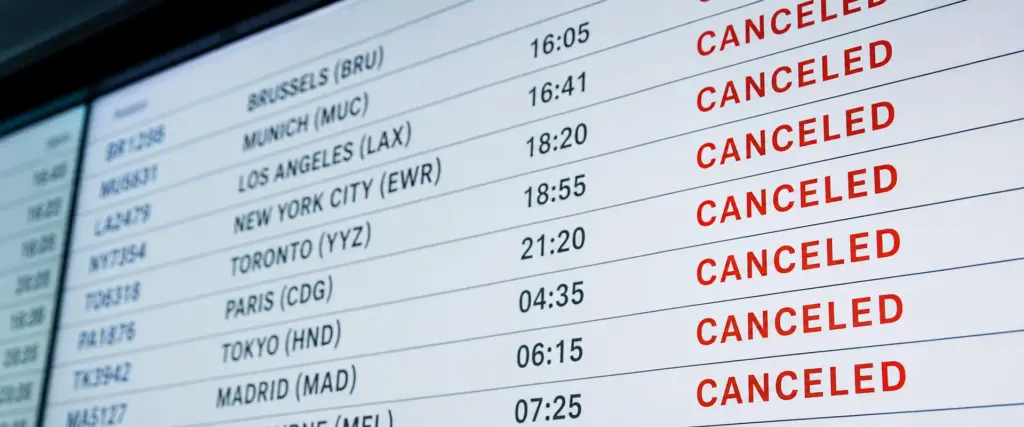
A delayed or canceled international flight can affect much more than your departure time. You may miss a connection, lose a hotel night, arrive late for a cruise or tour, or become separated from your checked baggage.
The first few decisions are important. Before canceling anything or buying another ticket, confirm what the airline has changed, review the alternative offered, and understand whether your itinerary is protected on one ticket.
What should you do first?
When you receive a delay or cancellation notice:
- Check the airline’s official app or website.
- Confirm whether the entire itinerary has been rebooked.
- Review the new departure, arrival, and connection times.
- Determine whether all flights are on one ticket.
- Contact the airline and, when applicable, the travel agency that issued the ticket.
- Ask what will happen to your checked baggage.
- Save screenshots, notices, boarding passes, and receipts.
During a major disruption, airport lines and telephone hold times can become very long. Use the airline app while waiting in line, but do not accept or cancel an option until you understand how it affects the complete trip.
Check whether the airline already rebooked you
Airlines frequently rebook passengers automatically after a cancellation or major delay.
Do not look only at the first replacement flight. Review the entire itinerary. A new routing may:
- Add another connection.
- Change the arrival airport.
- Require an airport transfer.
- Create an overnight layover.
- Separate travelers who were originally booked together.
- Remove seat assignments or special-assistance requests.
- Arrive too late for a domestic connection, cruise, tour, or hotel reservation.
If the proposed itinerary does not work, look for reasonable alternatives before contacting the airline. Having flight numbers and dates ready may make the conversation more productive.
Should you accept rebooking or request a refund?
A refund and a replacement flight solve different problems.
A refund returns the value of the unused ticket, but it does not necessarily get you to your destination. A new last-minute ticket on another airline may cost considerably more than the original fare.
Rebooking keeps the airline responsible for transporting you under the revised itinerary. Once you accept and travel on the alternative flight, you generally cannot also request a full refund for the transportation you used.
For flights to, from, or within the United States, passengers may qualify for a refund when the airline cancels or significantly changes the itinerary and the passenger declines the alternative transportation. For international itineraries, the U.S. Department of Transportation currently treats certain changes of six hours or more, an airport change, an added connection, or an involuntary downgrade as significant changes. Review the current U.S. Department of Transportation refund guidance before making a decision.
Before choosing a refund, compare:
- The price of a replacement ticket.
- The next available flight.
- Hotel or transportation costs.
- Important events at the destination.
- Whether other passengers are traveling on the same reservation.
- Whether unused connecting or return flights could also be affected.
What happens when you miss a connection?
The answer depends heavily on whether the flights were issued together.
Flights on one ticket
When a delay causes you to miss a protected connection on the same ticket, the airline will generally work to rebook you to the ticketed final destination.
Confirm that the new reservation includes every remaining segment. Do not assume the next flight has been protected merely because the first flight changed.
Ask:
- Which flight am I confirmed on?
- Am I confirmed or only on standby?
- Are my traveling companions on the same flight?
- Will my checked baggage be transferred?
- Do I need a new boarding pass?
- Have my seats and special-assistance requests been restored?
Flights on separate tickets
Separate tickets create a much greater risk. The second airline may treat you as a no-show even when the first airline caused the delay.
Contact the second airline immediately. Explain the situation, but understand that it may not be required to rebook you without additional payment.
This is one reason a seemingly inexpensive self-transfer itinerary can become very costly during a disruption. For more planning guidance, see International Flight Connections: How Much Time Do You Really Need?
Ask why the flight was disrupted
The reason can affect the assistance available.
A disruption may result from:
- Severe weather.
- Air traffic control restrictions.
- Airport closures.
- Mechanical problems.
- Crew scheduling.
- Airline technology or operational issues.
- Security events.
- Strikes or other extraordinary circumstances.
In the United States, meals, hotels, and transportation are not automatically required for every delay or cancellation. Airline commitments often depend on whether the cause was within the airline’s control. The U.S. Department of Transportation maintains an airline cancellation and delay dashboard showing commitments made by major U.S. airlines.
Ask the airline directly:
- Is this considered a controllable disruption?
- Is a meal voucher available?
- Will the airline provide a hotel?
- Is transportation to the hotel included?
- Can I be rebooked on a partner airline?
- What expenses, if any, may be submitted for reimbursement?
Do not assume that an airline will reimburse an expensive hotel or meal purchased independently. Ask first when possible and keep expenses reasonable.
What assistance applies in Brazil?
For disruptions governed by Brazilian aviation rules, ANAC requires airlines to keep passengers informed and provide material assistance according to the waiting period.
- After one hour: communication assistance.
- After two hours: food or meal assistance.
- After four hours: accommodation when an overnight stay is necessary, together with transportation between the airport and lodging.
For delays exceeding four hours, cancellations, and certain service interruptions, passengers must generally be offered options such as re-accommodation or reimbursement. Review ANAC’s current guidance on delays, cancellations, denied boarding, and material assistance.
The exact remedy can depend on where the disruption occurs, the itinerary, and the circumstances. Ask the operating airline to explain the available options before making independent arrangements.
What about flights involving Europe or the United Kingdom?
Flights covered by European Union or United Kingdom passenger-rights rules may include rights to care, rerouting, reimbursement, and, in qualifying circumstances, financial compensation.
Coverage depends on factors such as:
- Where the flight departed.
- Where it arrived.
- Which airline operated it.
- The length of the delay.
- When the cancellation was announced.
- Whether the cause was considered extraordinary.
Under current European Union guidance, covered passengers may qualify for compensation when they reach the final destination at least three hours late, unless extraordinary circumstances apply. The United Kingdom has a related framework known as UK261. Check the official European Union air-passenger-rights guide and the UK Civil Aviation Authority guidance for the rules that apply to the itinerary.
Do not rely only on a generic social-media post or compensation website to determine eligibility. Check the official regulator’s current guidance and submit the initial claim directly to the airline.
What happens to checked baggage?
A flight change does not guarantee that your baggage will follow the same itinerary.
Ask an airline representative:
- Is my bag still loaded on the original flight?
- Has it been transferred to the replacement flight?
- Must I collect and recheck it?
- Where will it be delivered if I travel on a different route?
- Should I file a baggage report now?
Keep baggage receipts and take a photo of the bag tag. If your bag does not arrive, report it before leaving the airport and obtain the baggage-report reference number.
Keep medication, passports, keys, valuables, chargers, and one change of clothing in your carry-on whenever practical. Our baggage-allowance guide explains what travelers should confirm before packing.
Protect the rest of your trip
A flight disruption may affect reservations that the airline does not control.
Notify affected providers as soon as possible, including:
- Hotels.
- Cruise lines.
- Tour operators.
- Car-rental companies.
- Airport-transfer providers.
- Friends or relatives meeting you.
- The second airline when traveling on separate tickets.
Do not assume a hotel or cruise company will automatically learn about your flight delay. Ask whether the reservation can be held, modified, or documented as a late arrival. Keep written confirmation of any changes.
Save evidence and receipts
Create a simple record while events are happening.
Save:
- The original itinerary.
- Cancellation or delay notifications.
- Screenshots of the airline app.
- Boarding passes.
- Replacement-flight details.
- Written explanations from the airline.
- Baggage reports.
- Hotel, meal, and transportation receipts.
- Records of calls or online conversations.
- The actual time you reached your final destination.
Receipts do not guarantee reimbursement, but claims are much harder without documentation.
Check your travel insurance
Some travel insurance plans may provide benefits for qualifying travel delays, interruptions, missed connections, or additional expenses.
Coverage is not automatic. It depends on the purchased plan, the reason for the disruption, waiting periods, limits, exclusions, and supporting documents.
Contact the insurance assistance service promptly and ask:
- Is this disruption potentially covered?
- Is there a required waiting period?
- What expenses are eligible?
- Must arrangements be approved in advance?
- What documents will be needed?
Chang Express can help customers review travel insurance options before a trip, but the insurance provider determines whether a claim qualifies for payment.
Avoid support scams during major disruptions
Scammers sometimes create fake airline support accounts when cancellations are widespread.
Use only:
- The airline’s official app.
- The airline’s verified website.
- Telephone numbers shown on the official website.
- The airport’s official customer-service desk.
- The travel agency that issued your reservation.
Never send a passport image, credit-card number, or account password to an unverified social-media account.
Quick disruption checklist
Before leaving the airport or accepting a new itinerary, confirm:
- Your complete replacement itinerary.
- Whether every traveler is confirmed.
- The status of checked baggage.
- Meal, hotel, and transportation assistance.
- The effect on connections and return flights.
- Any terminal or airport changes.
- The actual final destination and arrival time.
- Whether special assistance has been restored.
- What receipts and documents you should retain.
How Chang Express can help
When a ticket was issued through Chang Express, our team can help review the reservation, explain airline schedule changes, and examine available rebooking options.
During an active airport disruption, the operating airline may control immediate same-day changes. Travelers should work with airport or airline staff while also contacting Chang Express during our business hours.
The most important rule is simple: do not cancel your ticket or purchase an expensive replacement until you understand the alternatives and the effect on the rest of your itinerary.
Travel disruptions are stressful, but careful decisions, good documentation, and timely communication can prevent one delayed flight from becoming a much larger problem.
Reviewed July 2026. Airline policies and passenger-rights rules can change. This article provides general travel information and is not legal advice.

Want help planning a trip like this?
Chang Express can help with flights, hotels, domestic connections, travel insurance, and custom itinerary planning for Brazil and beyond.